Paving the Future: How Pavement Technology NHAI is Revolutionizing India’s Highways
Estimated reading time: 12–15 minutes
Key Takeaways
- The National Highways Authority of India (NHAI) is crucial for building and maintaining India’s extensive road network, supporting economic growth and connectivity.
- Innovation in **pavement technology NHAI** employs is vital to overcome challenges like heavy traffic loads, diverse climatic conditions, and the need for cost-effectiveness.
- NHAI extensively uses advanced materials such as Polymer-Modified Bitumen (PMB) and Crumb Rubber Modified Bitumen (CRMB) to enhance road durability, elasticity, and resistance to wear.
- Sustainable practices are at the forefront, with NHAI promoting recycled asphalt highways (RAP), the utilization of plastic waste, fly ash, and other industrial by-products to reduce environmental impact.
- The future involves advanced road surface innovation, including smart pavements with integrated sensors, research into self-healing concrete, permeable pavements for water management, and low-noise surfaces for community well-being.
- Despite challenges in standardization, initial costs, and workforce training, NHAI is committed to continuous R&D, pilot projects, and Public-Private Partnerships to advance road infrastructure.
Table of Contents
- Paving the Future: How Pavement Technology NHAI is Revolutionizing India’s Highways
- Key Takeaways
- The Foundation: Why Innovation is Crucial for NHAI Roads
- Exploring Innovative Road Materials: Beyond Traditional Asphalt
- Sustainable Solutions: The Rise of Recycled Asphalt Highways and Other Green Technologies
- Broadening the Horizon: Road Surface Innovation for Future-Ready Infrastructure
- The Future of Pavement Technology at NHAI: Challenges and Opportunities
- Conclusion: A Robust Path Ahead for Indian Highways
- Frequently Asked Questions
India’s journey of rapid economic growth and development relies heavily on a strong network of roads. These roads are like the veins and arteries of the nation, making sure goods, services, and people can move smoothly. A well-built transportation system is not just about getting from one place to another; it boosts trade, helps tourism, and connects communities, big and small.
At the heart of building and maintaining this crucial network is the National Highways Authority of India (NHAI). This important agency is in charge of developing, maintaining, and managing India’s vast network of National Highways. This network is truly massive, now stretching over 146,000 km across the country. It’s a lifeline for millions, helping to bring everyone closer.
[Source: NHAI Official Website – Statistics]
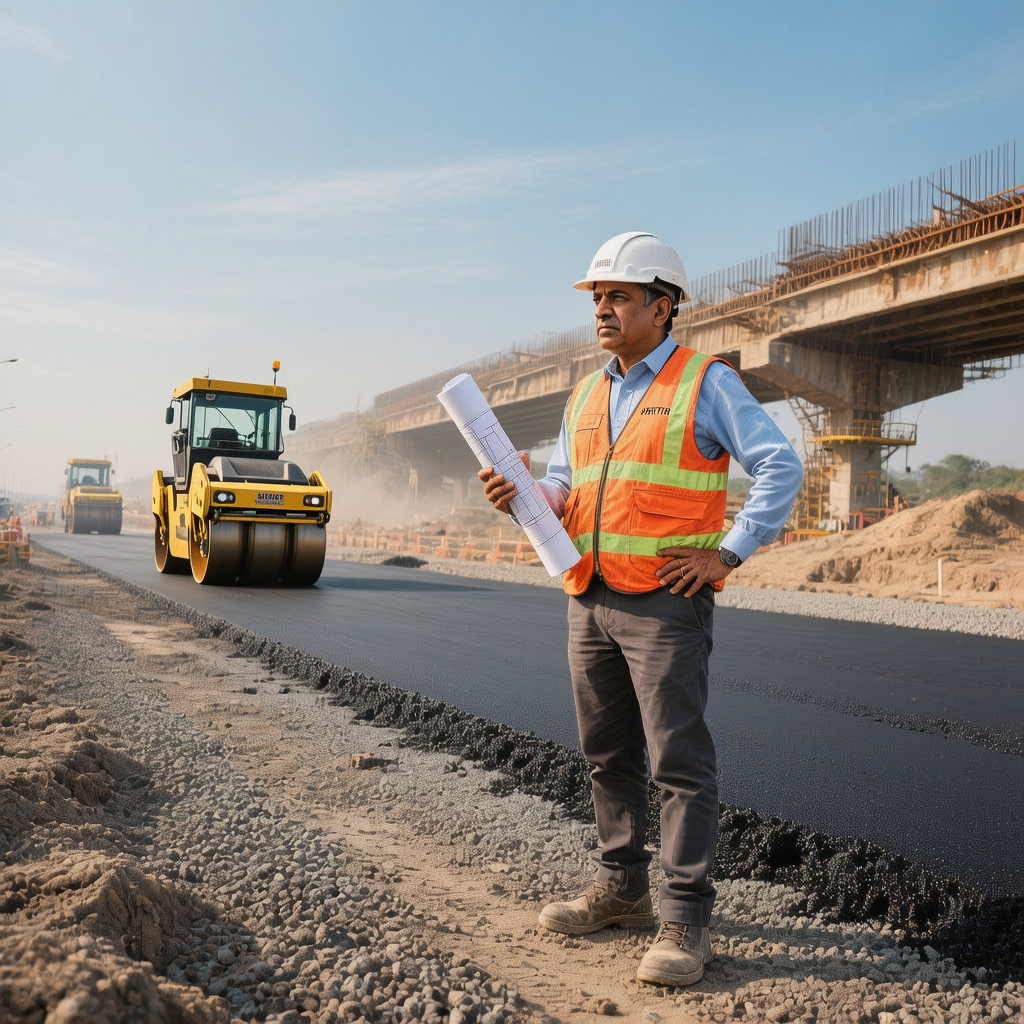
However, building roads in India is a tough job. NHAI faces many challenges. There are more and more vehicles on the roads every day, carrying heavier loads. India also has a very diverse climate, from extremely hot summers to heavy monsoon rains and cold winters. These conditions put a lot of stress on the roads, making them wear out faster. To tackle these big issues, NHAI has made a strategic shift. They are now using advanced **pavement technology NHAI** employs to construct roads that are not just good, but resilient, long-lasting, and ready for the future.
This blog post will take a deep dive into the newest ideas, materials, and techniques that are changing how roads are built under NHAI’s care. We will explore how NHAI is committed to building world-class infrastructure that stands the test of time and traffic.
The Foundation: Why Innovation is Crucial for NHAI Roads
Imagine building a house with old tools when you know there are much better, stronger ones available. That’s a bit like traditional road construction in today’s India. Old ways of building roads, using conventional asphalt and concrete, are often not good enough for India’s growing needs and environmental challenges. That’s why innovation in road building, and especially in the materials used, is so crucial for NHAI. The agency understands that relying solely on conventional methods won’t meet the rigorous demands placed upon modern national highway systems.
There are several key reasons why NHAI must innovate and embrace advanced construction methods:
-
**Extreme Weather Conditions:**
India’s climate is incredibly varied. From scorching summer heat that can melt and deform road surfaces to heavy monsoon rains that cause water damage and flooding, and even cold winters that can make roads crack, the weather is a constant challenge. These diverse conditions cause roads to wear out quickly. This leads to common problems like rutting (grooves in the road), cracking, and potholes. To fight this, NHAI needs materials that can better resist extreme temperatures and keep water from getting in and damaging the road’s structure. These materials help ensure **climate resilience** for the highway network.
-
**Heavy Traffic Loads:**
Indian highways see a huge amount of traffic, especially commercial trucks carrying very heavy loads. The sheer volume of vehicles, combined with their increasing weight, puts immense stress on the road’s surface and underlying structure. This constant pressure can cause roads to fail early, leading to fatigue and structural weaknesses. To prevent this, NHAI needs to use stronger and more durable pavement designs that can handle these heavy loads without breaking down. This ensures the **structural integrity** of the national highways.
-
**Need for Cost-Effectiveness:**
Building and maintaining roads is expensive. NHAI focuses on getting the best value for money over the entire life of a road, not just the initial building cost. This is called lifecycle cost optimization. Innovations that make roads last longer, need less frequent repairs, and cause fewer disruptions from roadwork can save a lot of money in the long run. By choosing smarter, more durable **innovative road materials**, NHAI reduces future maintenance burdens, leading to significant **economic benefits** over the road’s lifespan.
-
**Environmental Concerns:**
Traditional road construction uses a lot of natural resources, like aggregates (stone, sand, gravel) and bitumen (a crude oil product). It also creates a lot of carbon emissions, which harm the environment. There’s a growing push to use greener, more sustainable alternatives and follow circular economy principles, where waste products are reused. NHAI is committed to reducing its **environmental footprint** and finding eco-friendly solutions.
To overcome these hurdles, NHAI is actively looking for and using advanced construction methods and **innovative road materials**. This smart approach aims to make roads last longer, reduce the need for repairs, make them safer, and align with goals for environmental sustainability. This ensures India’s national highways are truly “future-proof,” serving the nation effectively for generations to come.
Exploring Innovative Road Materials: Beyond Traditional Asphalt
NHAI is deeply committed to building superior road infrastructure for India. This commitment is clear in its progressive adoption of advanced materials that go far beyond just conventional bitumen and aggregates. These advanced materials are chosen because they significantly enhance the durability, flexibility, and overall performance of the roads. They represent a fundamental upgrade in **pavement technology NHAI** utilizes for its highway projects, ensuring the roads can withstand the rigorous Indian climate and traffic conditions for decades.
Let’s look at some of these game-changing materials:
Polymer-Modified Bitumen (PMB)
**What it is:** PMB is a special type of bitumen (the sticky, black part of asphalt) that has been mixed with specialized polymers. Think of polymers as strong, flexible plastic-like materials. When added to bitumen, they change its properties significantly.
**How it helps:**
- **Improved Elasticity:** PMB becomes much more elastic. This means it can stretch and return to its original shape better.
- **Rutting Resistance:** In India’s hot summers, traditional asphalt can soften and develop ruts (grooves) from heavy vehicles. PMB is much more resistant to rutting at high temperatures, keeping the road surface smooth.
- **Cracking Resistance:** In colder weather, traditional asphalt can become brittle and crack. PMB helps to stop this cracking, making the road more durable in varying temperatures.
- **Enhanced Fatigue Resistance:** Roads are constantly under stress from traffic. PMB can withstand this repeated stress much better, leading to less fatigue and cracking over time.
- **Better Adhesion:** It sticks better to the aggregates (stones and gravel) in the road mix, creating a stronger overall pavement structure.
**The Benefit:** All these improvements mean that roads built with PMB have a considerably longer service life. They need fewer repairs and maintenance cycles, saving both time and money. NHAI has increasingly made it a requirement to use PMB in many of its major highway projects, recognizing its superior performance characteristics.
[Source: Ministry of Road Transport & Highways Circular/Guideline]
Crumb Rubber Modified Bitumen (CRMB)
**What it is:** CRMB is another innovative material where fine crumb rubber, which comes from processed waste vehicle tires, is blended into bitumen. It’s a fantastic example of solving two problems at once.
**How it helps:**
- **Environmental Solution:** It provides an environmentally friendly way to use up vast quantities of old tire waste that would otherwise end up in landfills, contributing to a cleaner environment. This is a major step towards **waste utilization** in infrastructure.
- **Superior Elasticity and Performance:** Like PMB, CRMB gives the bitumen superior elasticity. This means it can deform under stress but bounce back better.
- **Deformation Resistance:** It shows improved resistance to permanent deformation, meaning fewer ruts and less wear from heavy traffic.
- **Improved Adhesion:** CRMB also enhances the adhesion between the binder and aggregates, strengthening the road.
- **Reduced Noise:** An added benefit is that roads made with CRMB can help reduce the noise generated by vehicle tires, making for a quieter environment, especially in areas near towns and cities.
NHAI actively promotes the use of CRMB, especially for busy highway sections with high traffic. This recognizes its enhanced road performance and its significant environmental benefits from using recycled materials.
Advanced Aggregates and Binders
Beyond PMB and CRMB, NHAI also focuses on other key components of the road:
- **High-Quality Aggregates:** These are the crushed stones, gravel, and sand that make up the bulk of the road. NHAI continuously looks for high-quality aggregates with the right size distribution (gradation) and weight (specific gravity) to ensure the road is strong and stable. Selecting the right aggregate is fundamental to road stability and longevity.
- **Warm Mix Asphalt (WMA) Technologies:** Traditional hot mix asphalt is produced at very high temperatures, which uses a lot of energy and releases more fumes. WMA technologies use special additives that allow the asphalt to be mixed and laid at much lower temperatures.
- **Energy Savings:** This significantly reduces the amount of energy needed during production, cutting down on fuel consumption.
- **Reduced Emissions:** Lower temperatures also mean fewer harmful emissions are released into the air, making the construction process more environmentally friendly.
- **Improved Working Conditions:** It also creates a better working environment for road crews due to reduced fumes.
These material advancements are foundational. They are crucial for improving the overall **pavement technology NHAI** applies across the country, ensuring roads can truly withstand the rigorous Indian climate and traffic conditions for many decades, serving as resilient transportation corridors.
Sustainable Solutions: The Rise of Recycled Asphalt Highways and Other Green Technologies
Sustainability is not just a buzzword; it’s a core principle guiding NHAI’s infrastructure development strategy. The agency is at the forefront of integrating environmentally friendly practices and using recycled materials in a pioneering way. This commitment extends beyond building durable roads; it’s about building them responsibly, reducing waste, and conserving natural resources. NHAI’s efforts are making India a global leader in green highway construction, particularly through the development of **recycled asphalt highways** and other innovative green solutions.
Let’s explore some of these sustainable initiatives:
Recycled Asphalt Pavement (RAP)
**What it is:** Imagine taking an old, worn-out road, grinding up its asphalt layers, and then using that very same material to build a new road. That’s exactly what Recycled Asphalt Pavement (RAP) is. It involves milling (grinding off) existing asphalt layers, processing the material, and then reusing it in new road construction mixes. This practice ensures that the road materials have a new life, preventing them from becoming waste.
**How it helps:**
- **Environmental Benefits:**
- **Resource Conservation:** RAP significantly reduces the need for virgin (new) aggregates and bitumen. This means fewer stones have to be quarried and less crude oil needs to be processed, conserving precious natural resources.
- **Waste Reduction:** It divers large volumes of old asphalt from landfills, reducing waste and the environmental burden of disposal.
- **Lower Carbon Footprint:** Producing new asphalt materials is energy-intensive and generates carbon emissions. By reusing RAP, the carbon footprint associated with new material production and transportation is significantly lowered, contributing to a cleaner atmosphere.
- **Economic Benefits:**
- **Cost Savings:** Using RAP leads to substantial cost savings. There’s less money spent on buying new raw materials and less money needed for waste disposal. This makes road projects more economically viable and allows NHAI to stretch its budget further.
NHAI understands these dual benefits and actively promotes RAP. The agency targets a minimum percentage of RAP use in many of its projects, making it a standard practice in modern highway construction.
[Source: NHAI Project Guidelines/Reports]
Plastic Waste in Road Construction
This is a true flagship initiative strongly supported by the Ministry of Road Transport and Highways and NHAI. It’s a revolutionary way to tackle India’s plastic waste crisis while simultaneously improving road quality.
**How it works:** Processed plastic waste, such as shredded plastic bags, bottles, and other single-use plastics, is cleaned, shredded, and then added to bituminous mixes during road construction.
**Dual Impact:**
- **Addresses Plastic Crisis:** It effectively provides a large-scale, productive use for plastic waste that would otherwise pollute the environment or clog landfills.
- **Enhances Road Performance:** The plastic additives actually improve the road’s performance. They create stronger bonds within the asphalt mix.
- **Improved Durability:** Roads become more durable and resistant to wear and tear.
- **Water Resistance:** The plastic acts as a waterproofing agent, making the road more resistant to water ingress, which is a major cause of road damage, especially during monsoons.
- **Increased Fatigue Life:** The plastic-modified asphalt can withstand repeated stress from traffic for a longer period, extending the road’s overall lifespan.
Numerous sections of National Highways across India have been successfully constructed using this groundbreaking technology. This showcases India’s strong commitment to circular economy principles, turning waste into valuable infrastructure.
[Source: Ministry of Road Transport & Highways Press Release/Report]
Other Industrial By-products
NHAI’s commitment to sustainability extends to using other waste products from industries:
- **Fly Ash:** This fine powder is a by-product of thermal power plants. NHAI extensively uses fly ash in the construction of cement concrete roads, where it enhances strength and workability. It’s also used in embankments (raised road sections) and sub-bases for flexible pavements. This practice effectively divers large quantities of fly ash from landfills, preventing environmental pollution and providing a valuable material.
- **Waste Steel Slag:** As a by-product of steel manufacturing, waste steel slag is known for its superior strength and abrasion resistance. NHAI is exploring its use as a robust aggregate in various road layers, especially where high strength and resistance to wear are critical.
- **Construction and Demolition (C&D) Waste:** NHAI actively encourages the recycling of C&D waste (debris from building demolition and construction) into aggregates. These recycled aggregates are then used for granular sub-base and base layers of roads. This minimizes the burden on landfills and promotes overall resource efficiency in construction projects.
NHAI’s initiatives in integrating these recycled and industrial by-product components clearly demonstrate a strong, forward-thinking commitment to sustainable infrastructure. By doing so, India is not just building roads; it’s building a greener, more responsible future for its national highways.
Broadening the Horizon: Road Surface Innovation for Future-Ready Infrastructure
Beyond just the materials that make up the road, NHAI is also expanding its focus to include wider **road surface innovation** concepts. These innovations aim to create a more complete, intelligent, and user-friendly road network. It’s about moving from simply laying pavement to creating smart, responsive infrastructure that improves safety, efficiency, and the overall experience for road users and nearby communities. This forward-thinking approach is rapidly transforming the basic functionality of roads into dynamic systems.
Let’s explore these exciting advancements:
Smart Pavements and Integrated Sensors
Imagine roads that can “talk” and tell us what’s happening on them. That’s the idea behind “smart highways.” These involve embedding tiny sensors directly within the pavement structure itself. These sensors are like the road’s nervous system, gathering vital information in real-time. This helps NHAI move towards a system of **intelligent infrastructure** for India.
These critical sensors can monitor various important details:
- **Traffic Flow and Weight:** Sensors can accurately count vehicles, measure their speed, and even weigh them as they pass. This data is crucial for dynamic traffic management, allowing authorities to adjust signal timings or warn drivers of congestion. It also helps in enforcing weight limits for heavy commercial vehicles, protecting the road from premature damage.
- **Pavement Temperature and Moisture:** Roads are highly affected by weather. Sensors can provide real-time information about the road’s temperature and how much moisture is present. This data helps NHAI predict and prevent weather-related damage, such as frost heaving or thermal cracking. It can also optimize operations like de-icing in cold regions, making roads safer.
- **Structural Health:** Perhaps most importantly, these sensors can detect early signs of distress, tiny cracks, or deformation in the road’s structure. By catching these problems early, NHAI can switch from reactive repairs (fixing things after they’ve broken) to proactive and predictive maintenance. This means problems are addressed before they become serious, significantly extending the pavement’s life and reducing costly emergency repairs. This predictive capability is a game-changer for **asset management**.
Self-Healing Concrete
This is a truly futuristic concept, currently being researched and developed, that sounds almost like science fiction. Self-healing concrete aims to make concrete roads repair themselves automatically!
**How it works (conceptually):** The idea is to incorporate tiny microcapsules or special bacteria within the concrete mix. When small cracks form in the concrete (which is natural over time), these microcapsules break open or the bacteria become active. They then release healing agents (like special polymers or calcium carbonate) that effectively “repair” the crack, sealing it up before it can grow larger.
**The Promise:** This technology holds immense promise for significantly extending the lifespan of concrete pavements. Imagine roads that require far less manual intervention for repairs, leading to massive savings in maintenance costs and disruptions over many decades. It could redefine the long-term resilience of concrete structures.
Permeable Pavements
Traditional roads are often impermeable, meaning water just runs off them, leading to stormwater runoff and potential flooding. Permeable pavements offer an elegant solution.
**What it is:** These are pavements designed with porous surfaces. This means they have tiny interconnected spaces that allow rainwater to infiltrate (seep) directly through the surface layer into a granular sub-base below, or even into the underlying soil.
**The Benefits:**
- **Groundwater Recharge:** By allowing rainwater to soak into the ground, permeable pavements help to replenish groundwater levels, which is vital for water security.
- **Reduced Stormwater Runoff:** They significantly reduce the amount of stormwater rushing off roads during heavy rains. This helps to mitigate urban flooding, especially in low-lying areas.
- **Improved Water Quality:** As water filters through the pavement layers, it can help remove pollutants, improving the quality of the water that eventually recharges groundwater or flows into natural water bodies.
NHAI could potentially integrate these pavements in specific urban stretches or environmentally sensitive areas where water management and groundwater recharge are critical concerns.
Low-Noise Surfaces
Roads can be noisy, especially for communities living close to busy highways. **Road surface innovation** can address this.
**What it is:** These are specialized asphalt mixes designed with optimized aggregate gradations (sizes and shapes of stones) and specific void structures (small air pockets). These design features are engineered to interact with tire noise in a specific way.
**How it helps:**
- **Reduced Tire-Pavement Noise:** By changing the texture and structure of the road surface, these materials are highly effective in absorbing or dispersing the sound generated by vehicle tires rolling over the road. This significantly reduces noise pollution.
- **Enhanced Quality of Life:** This innovation directly contributes to a quieter environment for communities situated alongside highways, improving their quality of life.
- **Improved Driving Experience:** For drivers, a quieter road can also mean a more pleasant and less fatiguing driving experience.
These innovations collectively contribute to a paradigm shift. NHAI is moving beyond merely providing connectivity to building safer, more efficient, environmentally responsible, and technologically advanced road networks. This holistic approach ensures that India’s highways are not just pathways but intelligent, sustainable assets.
The Future of Pavement Technology at NHAI: Challenges and Opportunities
The journey towards fully adopting and integrating these advanced pavement technologies is an ongoing one for NHAI. It’s a path marked by both exciting opportunities to redefine India’s infrastructure and significant challenges that need careful navigation. The relentless pursuit of superior **pavement technology NHAI** undertakes is crucial for building a resilient national highway network.
Ongoing Research and Development (R&D)
NHAI is not just implementing existing technologies; it’s also actively looking ahead. The agency collaborates closely with premier research institutions across India, such as the Central Road Research Institute (CRRI) and various Indian Institutes of Technology (IITs). These partnerships are vital for pushing the boundaries of what’s possible in road construction.
Current R&D efforts are focused on several key areas:
- **Nano-materials:** Exploring tiny, specialized materials (at the nanoscale) that can be added to asphalt or concrete to significantly enhance their performance, making them stronger, more durable, and more resistant to wear.
- **Advanced Composite Pavements:** Developing multi-layered road structures that combine the best properties of different materials (e.g., concrete and asphalt) to create pavements that are exceptionally strong, flexible, and long-lasting.
- **More Energy-Efficient Cold and Warm Mix Technologies:** Further refining methods like Warm Mix Asphalt (WMA) and exploring Cold Mix Asphalt technologies to reduce energy consumption and environmental impact during road construction even more drastically.
This continuous investment in research and innovation ensures that NHAI remains at the forefront of global road engineering.
Challenges in Implementation
Despite the clear benefits, bringing these advanced technologies into widespread use across a vast country like India comes with its own set of hurdles:
- **Standardization:** When new materials and construction techniques are introduced, it’s essential to have clear, consistent rules and guidelines for their use. Developing and harmonizing national standards and specifications for novel materials (like PMB or plastic waste asphalt) and construction techniques is crucial. Organizations like the Indian Roads Congress (IRC) issue ‘IRC Codes’ which are vital for this standardization. Without clear standards, quality can vary greatly from project to project.
- **Initial Costs:** Some advanced technologies, especially those involving sophisticated smart sensors or highly specialized materials, might have higher upfront investment costs compared to traditional methods. This can be a deterrent. NHAI needs to conduct thorough lifecycle cost-benefit analyses to clearly show that while initial costs might be higher, the long-term benefits—like extended pavement life, reduced maintenance, and environmental advantages—justify the investment and offer significant value over the road’s entire lifespan.
- **Skilled Workforce:** Building and maintaining roads with advanced technologies requires specialized knowledge and skills. There’s a significant challenge in training and upskilling the vast workforce involved—from engineers and project managers to contractors and laborers. They all need to understand the new materials, equipment, and construction processes to ensure these advanced pavements are built and maintained correctly. This necessitates comprehensive training programs and continuous learning initiatives.
- **Quality Control:** For any new technology to perform as expected, consistent quality control and assurance are paramount. Robust inspection and testing protocols are essential to guarantee the successful long-term performance of these advanced technologies. Ensuring that new materials are mixed correctly, laid properly, and meet all specifications across numerous projects and diverse geographical regions is a massive undertaking.
NHAI’s Commitment
Despite these hurdles, NHAI’s commitment to embracing advanced **pavement technology NHAI** is resolute. The agency is actively working to overcome these challenges.
- **Pilot Projects:** NHAI encourages pilot projects for new materials and techniques. These smaller-scale trials allow for testing, refinement, and demonstration of new technologies before wider adoption.
- **Public-Private Partnerships (PPPs):** NHAI fosters collaborations with private sector companies through Public-Private Partnerships. These partnerships often bring in private capital, expertise, and innovative solutions, helping to drive the adoption of new technologies more rapidly.
- **Updating Engineering Specifications:** The agency continuously updates its engineering specifications, often incorporating the latest proven advanced techniques into documents like the ‘IRC Codes’ issued by the Indian Roads Congress. This institutionalizes innovation and ensures that contractors are mandated to use the best available practices.
This forward-looking approach ensures that India’s highways continue to evolve. They are not just meeting the demands of a rapidly developing nation but also aligning with global best practices in road construction and engineering. This strategic vision is key to India’s continued progress.
Conclusion: A Robust Path Ahead for Indian Highways
NHAI’s journey in modernizing India’s road infrastructure is a powerful testament to its strategic embrace of cutting-edge **pavement technology NHAI**. This commitment goes beyond simply building roads; it’s about engineering resilient, sustainable, and intelligent pathways that underpin the nation’s progress.
We’ve seen how NHAI is relentlessly pursuing innovation across several key areas:
- **Enhancing Durability and Resilience:** Through the intelligent use of materials like Polymer-Modified Bitumen (PMB) and Crumb Rubber Modified Bitumen (CRMB), NHAI is ensuring roads can withstand extreme weather and heavy traffic loads, extending their lifespan significantly.
- **Championing Environmental Sustainability:** With pioneering initiatives such as **recycled asphalt highways** (RAP) and the ingenious utilization of plastic waste, NHAI is not only building better roads but also conserving natural resources and tackling India’s waste management challenges. The integration of industrial by-products further solidifies this green commitment.
- **Exploring Futuristic Concepts:** The agency is actively looking towards the future with concepts like smart pavements equipped with integrated sensors and the promise of self-healing concrete, representing true **road surface innovation**. These advancements aim to create an intelligent, responsive, and safer road network.
These advancements are not just small improvements; they represent a fundamental paradigm shift. NHAI is moving towards building road networks that are more resilient, more sustainable, more intelligent, and ultimately, more user-centric. This transforms basic connectivity into a dynamic, future-ready infrastructure.
The journey ahead will undoubtedly involve continuous investment in research and development, coupled with a proactive approach to overcoming implementation challenges such as standardization, initial costs, and workforce training. However, NHAI’s unwavering focus on these aspects demonstrates a profound national commitment.
By integrating these advanced technologies, NHAI is meticulously forging a robust, future-ready pathway that will underpin India’s economic growth, enhance national connectivity, and ensure safer, more efficient journeys for generations to come. The dedicated efforts in advancing **pavement technology NHAI** employs truly pave the way forward for a stronger, greener, and smarter India.
Frequently Asked Questions
-
How does advanced pavement technology benefit NHAI projects in the long run?
Advanced pavement technology, like the use of PMB and CRMB, significantly extends the lifespan of roads, reducing the need for frequent repairs and maintenance. This leads to substantial lifecycle cost savings, fewer traffic disruptions, and enhanced safety for road users over many decades. It also builds resilience against diverse climatic conditions and heavy traffic loads.
-
What are some key sustainable materials NHAI uses in road construction?
NHAI is a leader in sustainable road construction, primarily using Recycled Asphalt Pavement (RAP) to conserve virgin resources and reduce waste. They also extensively incorporate processed plastic waste, fly ash from thermal power plants, and industrial by-products like steel slag, transforming waste into valuable construction materials. These initiatives reduce environmental impact and promote a circular economy.
-
How is NHAI addressing the challenges of implementing new technologies?
NHAI addresses implementation challenges through ongoing research and development partnerships with institutions like CRRI and IITs. They promote pilot projects for new materials, update engineering specifications and ‘IRC Codes’ for standardization, and foster Public-Private Partnerships (PPPs) to leverage expertise and capital. NHAI also focuses on workforce training to ensure proper application and maintenance of advanced technologies.