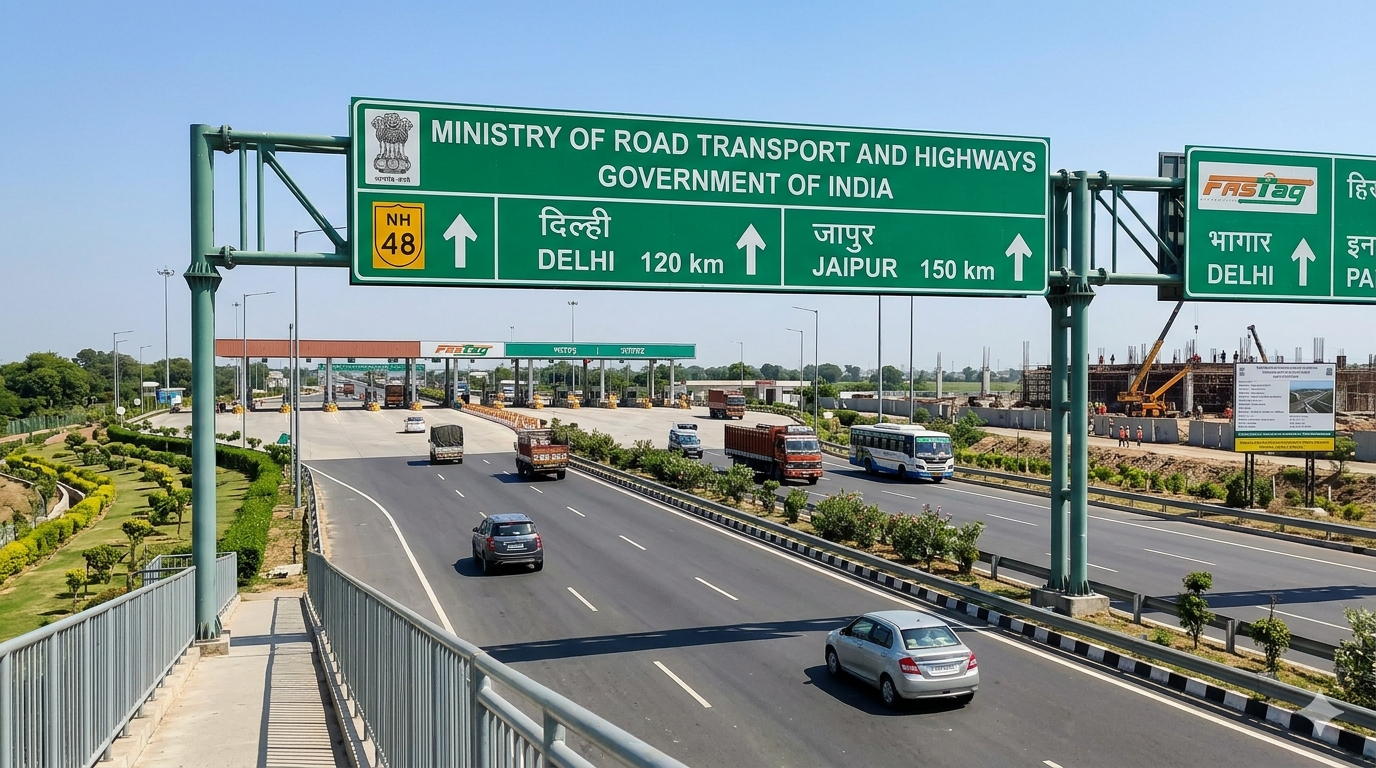
The Future of Indian Infrastructure: Leveraging Toll Data Analytics for Efficiency and Revenue
Estimated reading time: 6–8 minutes
Key Takeaways
- The adoption of FASTag has surged from 16% in 2018 to nearly 99% today, processing millions of daily transactions.
- Implementing toll data analytics helps road operators transform massive databases into actionable business intelligence.
- NHAI is utilizing advanced technologies, including “Data Lakes,” ATMS, and Weigh-In-Motion integrations, to monitor and maintain highway quality.
- Automated NHAI toll data reports play a vital role in preventing revenue leakage, managing chargebacks, and ensuring regulatory compliance.
- The imminent transition to satellite-based tolling (GNSS) will shift analytics focus toward geographic information systems and cloud matching.
Table of Contents
- The Future of Indian Infrastructure: Leveraging Toll Data Analytics for Efficiency and Revenue
- Key Takeaways
- The Evolution of Infrastructure: Highway Data Analytics
- Defining Toll Data Analytics: Beyond Basic Counting
- Compliance and Financial Transparency: NHAI Toll Data Reports
- Real-Time Oversight: Utilizing a Toll Performance Dashboard
- Future Trends: Satellite-Based Tolling and Beyond
- Glossary Sidebar
- Frequently Asked Questions
India is currently witnessing a massive transformation in how we move across the country. The scale of this change is truly impressive. According to data from the National Payments Corporation of India (NPCI) and the National Highways Authority of India (NHAI), the use of FASTag has grown incredibly fast. In 2018, only 16% of vehicles used this technology. Today, that number has jumped to between 98% and 99%.
This shift has created a high-tech system that is always on. The National Electronic Toll Collection (NETC) now handles over 10 million transactions every single day. In the financial year 2023-24 alone, this resulted in over ₹50,000 crore in toll collections. While this shows great progress, it creates a new challenge. We are now “data rich” but often “insight poor.” Operators have mountains of information but struggle to use it.
“Raw data is like clean water; it is highly valuable, but only if you have the infrastructure to direct it where it is needed most.”
This is why toll data analytics is so important. We need these tools to take raw transaction logs and turn them into smart, actionable information. By using advanced software, operators can better manage our roads, increase revenue, and ensure everything runs smoothly.
The Evolution of Infrastructure: Highway Data Analytics
The NHAI is moving toward a “Data Lake” architecture to manage how roads are built and monitored. Think of a data lake as a giant digital storage pool where all types of information are kept safe and ready for analysis. This helps officials track the entire life of a road project, from the first stone laid to daily maintenance.
On new projects, like the Delhi-Mumbai Expressway, the government is using Advanced Traffic Management Systems (ATMS). These systems use high-tech cameras and sensors to keep track of every vehicle on the road.
This is where highway data analytics becomes a game-changer. These systems process real-time feeds from vehicle classifiers and speed cameras. By analyzing this data, operators can control traffic flow, reduce accidents, and spot maintenance needs before they become big problems. It turns a simple road into a smart, thinking network.
Industry-wide standards and policies are closely guided by the Ministry of Road Transport and Highways (MoRTH) to ensure uniform deployment of these digital systems.
Defining Toll Data Analytics: Beyond Basic Counting
Many people think tolling is just about counting cars. However, toll data analytics is much more than that. It is the systematic study of digital records to make sure everything is working as efficiently as possible.
A great example of this is the integration of Weigh-in-Motion (WIM) systems with FASTag. WIM uses sensors to weigh a truck while it is still driving. If a vehicle is carrying too much weight, it can damage the road. Under MoRTH guidelines, overloaded trucks are charged a higher, double-toll fee. Analytics tools allow road operators to track these patterns. If a specific company is always overloading their trucks, the system can flag them, helping to stop pavement damage before it gets worse.
Analytics also helps with fraud detection. By pairing Automatic Number Plate Recognition (ANPR) with RFID technology, the system can spot problems instantly. For example, if a FASTag meant for a small private car is being used on a giant commercial truck, the software flags it. This stops people from cheating the system and ensures that toll revenue is collected correctly.
Compliance and Financial Transparency: NHAI Toll Data Reports
Accuracy is the most important part of running a toll plaza. There is a complex process of “reconciliation” between the Indian Highways Management Company Limited (IHMCL) and the NPCI. Sometimes, errors happen where the number of cars that actually passed the toll gate does not match the money sent to the bank. This can lead to “chargebacks,” where money is disputed or delayed.
This is why automated NHAI toll data reports are vital. These reports act as the official diary for toll operators. They record every single transaction that happens throughout the day. If a dispute occurs, these logs provide the proof needed to show exactly what happened.
These reports are also important for compliance. The NHAI performs regular audits to make sure operators are following the rules. By having a digital, easy-to-read, and verifiable log of every transaction and exception, operators can pass these audits without any penalties. It keeps the business honest and the money flowing correctly.
Real-Time Oversight: Utilizing a Toll Performance Dashboard
In May 2021, the NHAI set a very strict rule: a vehicle should not have to wait at a toll plaza for more than 10 seconds. Furthermore, the queue of cars should not be longer than 100 meters. If the traffic line gets too long, the toll operators must open the gates and let vehicles pass for free until the traffic clears.
This is why a toll performance dashboard is a necessary tool for any modern operator. This dashboard provides a live, birds-eye view of every single lane at a toll plaza. It shows if a lane is moving fast, if it is stuck, or if it is closed for repairs.
When the dashboard shows that a line is reaching the 100-meter limit, operators can act fast. They can instantly send staff to open more lanes or fix a broken tag reader. By using this real-time data, they avoid losing money from the “100-meter rule” and keep traffic moving for everyone. It is all about making quick, smart decisions based on what is happening on the ground right now.
Future Trends: Satellite-Based Tolling and Beyond
The future of driving on Indian roads is changing again. Government updates published by the Press Information Bureau (PIB) outline plans to move toward a Global Navigation Satellite System (GNSS) based tolling system. This will eventually replace physical barriers at toll gates. Instead of stopping, your car will be tracked by satellites, and the toll will be deducted automatically based on the distance you have traveled.
This move will create a massive shift in how we analyze data. As physical gates go away, we will rely more on GIS mapping and cloud database matching to calculate fees. We will need to process massive amounts of location data to ensure everyone is charged the right amount.
Ultimately, toll data analytics and highway data analytics are no longer just “nice-to-have” tools. They have become the backbone of our country’s infrastructure. Whether we are dealing with physical toll gates or satellite-based systems, these data tools ensure that our highways remain efficient, profitable, and ready for the future.
Glossary Sidebar
- WIM (Weigh-In-Motion): These are smart sensors built into the road that measure the weight of a vehicle’s axles while the vehicle is moving. This helps prevent road damage from overloaded trucks.
- ANPR (Automatic Number Plate Recognition): This is a high-tech camera system that uses optical character recognition to read a vehicle’s license plate automatically.
- GNSS (Global Navigation Satellite System): This is the future of road travel. It uses satellites to track where a vehicle goes, allowing the government to charge drivers based on exactly how many kilometers they drive, rather than having them stop at a toll gate.
Frequently Asked Questions
-
What is Toll Data Analytics and why is it important?
Toll data analytics involves collecting, organizing, and studying transaction logs and vehicle data from plazas. It is essential because it allows highway operators to optimize operational efficiency, prevent toll evasion, track structural road damage, and improve overall highway financial management.
-
What is the 100-meter rule set by the NHAI?
The NHAI requires that vehicle wait times at toll booths stay below 10 seconds, and queues must not extend past 100 meters. If traffic exceeds this threshold, toll operators must open the barrier gates to clear the backlog, which makes real-time dashboard tracking crucial for protecting operational revenue.
-
How will satellite-based tolling change data collection?
Satellite-based (GNSS) tolling eliminates the need for physical toll booths. Instead of localized RFID scans, systems will continuously analyze geographic coordinate data and match vehicle tracks with digital maps to automatically charge drivers based on their exact distance traveled.