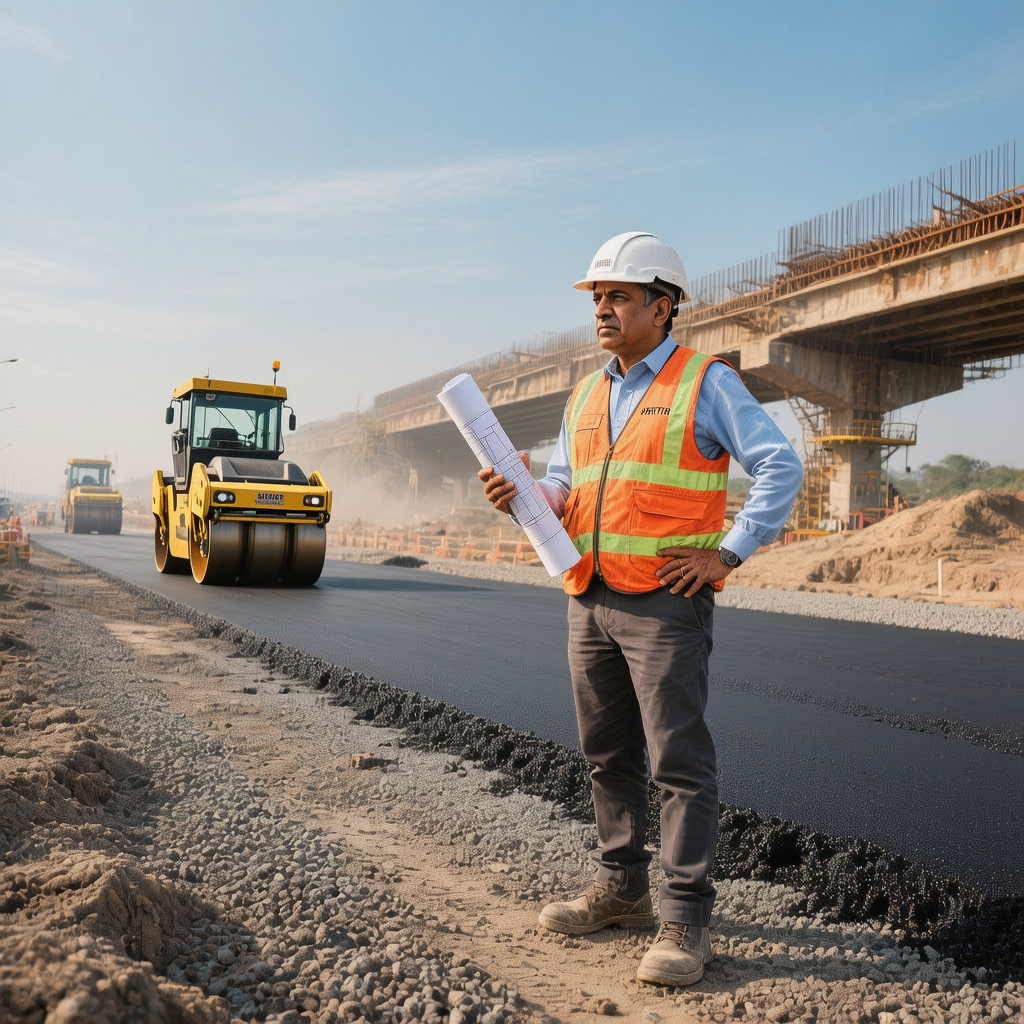
Transforming India’s Roadways with Smart Lighting Highways
Estimated reading time: 6–8 minutes
Key Takeaways
- India is rapidly modernizing its infrastructure, building highways at a pace of up to 38 kilometers per day.
- The transition to smart lighting highways is a key pillar of India’s Net-Zero emissions goal by 2070.
- Using IoT, Centralized Control systems (CCMS), and adaptive dimming, modern highways reduce electricity use by 70% to 80%.
- Innovative models like ESCO are helping the government implement these upgrades with zero upfront public costs.
- Future smart poles will double as 5G cells, Wi-Fi hotspots, and EV charging stations.
Table of Contents
- Transforming India’s Roadways with Smart Lighting Highways
- Key Takeaways
- Decoding the Technology: How Smart Lighting Highways Work
- The Tech Pillars of LED Lighting NHAI and Solar Highway Lights
- Why Modernization Matters: Energy-Efficient Road Lighting
- Overcoming Challenges and the Future Roadmap for Smart Lighting Highways
- Conclusion: Driving Toward a Sustainable Future
- Extended Deep Dive: The Mechanics of Modern Road Safety
- Frequently Asked Questions
India is currently witnessing an unprecedented era of infrastructure development. With the second-largest road network in the world, spanning approximately 66.7 lakh kilometers, the country is moving fast. Of this, 1.46 lakh kilometers consist of high-speed National Highways. Under the Ministry of Road Transport and Highways (MoRTH), the nation is constructing new roads at a blistering pace of 28 to 38 kilometers per day.
However, rapid growth brings a massive responsibility toward the planet. As India aims for Net-Zero emissions by 2070, the NHAI (National Highways Authority of India) is pivoting toward the concept of “Green Highways.” A core part of this vision involves upgrading our infrastructure to include smart lighting highways.
“This shift isn’t just about brightness; it is about intelligence, sustainability, and saving our environment while keeping millions of commuters safe every single night.”
By transitioning away from old, high-energy High-Pressure Sodium (HPS) lamps to modern, IoT-enabled infrastructure, India is modernizing road safety.
Decoding the Technology: How Smart Lighting Highways Work
To understand how smart lighting highways function, we must look at the “brain” of the operation. Modern road lighting is no longer just a switch that turns on at dusk. It is a sophisticated network of sensors and software.
-
The Centralized Control and Monitoring System (CCMS)
The CCMS acts as the command center for the entire highway lighting network. Using GSM or GPRS-enabled web applications, highway authorities can monitor thousands of lights from a single remote location. If a bulb stops working, the system sends an instant SMS alert to the maintenance team, ending the need for slow, manual patrolling.
-
Automation Sensors
The system uses clever technology to handle changing weather conditions:
- Astronomical Timers: These are programmed with the exact sunrise and sunset times for a specific location. They ensure lights activate at the precise second they are needed.
- LDR Sensors: These are “Light Dependent Resistors.” They act like eyes for the system, sensing sudden darkness caused by heavy fog, rain, or even solar eclipses. If visibility drops, the lights turn on automatically to ensure safety.
-
Adaptive Dimming
This is the most efficient feature. During the deep hours of the night when traffic is low, the system automatically dims the LEDs to 30% brightness. As soon as sensors detect an approaching vehicle, the lights ramp up to 100% brightness. This saves huge amounts of electricity while maintaining perfect visibility for drivers.
The Tech Pillars of LED Lighting NHAI and Solar Highway Lights
The government is not just replacing bulbs; they are redesigning the highway ecosystem. The two biggest pillars of this change are the switch to high-efficiency LEDs and the use of natural power.
LED Lighting NHAI: The Upgrade
Under the Street Lighting National Programme (SLNP), the government has mandated a transition to energy-efficient LED luminaires. Modern marvels like the Delhi-Mumbai Expressway and the Dwarka Expressway are prime examples of this progress. These roads are not just paved paths; they are “Smart Highways” integrated with Intelligent Transport Management Systems (ITMS) that work hand-in-hand with smart lighting.
Solar Highway Lights: Self-Sustaining Power
The goal is for highways to power themselves. The Eastern Peripheral Expressway (EPE) is a gold standard for this, acting as a 100% solar-lit success story. By using solar panels, these highways generate their own clean electricity during the day to light the path at night.
Additionally, the NHAI subsidiary, known as the National Highways Logistics Management Limited (NHLML), is actively using vacant land parcels alongside highways to set up solar power plants. These plants feed power directly into the highway grids, ensuring that solar highway lights remain functional even if the main power grid faces issues.
To learn more about the ongoing development and scale of these projects, you can check active updates directly on NHAI Projects or read details on Livemint.
Why Modernization Matters: Energy-Efficient Road Lighting
Switching to smart systems is not just an aesthetic upgrade; it is a financial and safety necessity. Energy-efficient road lighting plays a massive role in meeting India’s Paris Agreement goals.
-
Improving Road Safety
High-CRI (Color Rendering Index) LEDs are used in these projects to mimic natural daylight. Unlike the yellow, hazy glow of old sodium lamps, white LED light significantly improves peripheral vision and depth perception for drivers. On high-speed corridors like the Bengaluru-Mysore Expressway, this enhanced visibility helps drivers spot hazards earlier, effectively removing “black spots” and reducing nighttime accidents.
-
Energy and Cost Savings
The numbers speak for themselves. Replacing traditional lights with LEDs yields a 50% to 60% reduction in electricity consumption. When you add the CCMS dimming feature, that savings jumps to 70% to 80%. This is a massive win for the national budget and directly lowers the carbon footprint of India’s transport sector.
-
Operational Lifespan
Traditional sodium lamps usually last about 10,000 to 15,000 hours. In contrast, high-quality smart LEDs can last for 50,000 hours or more. This provides a 10 to 12-year operational lifespan, meaning fewer replacements, less maintenance work, and far less waste, contributing to a cleaner, more sustainable road network.
Major publishers like The Economic Times and The Hindu have repeatedly highlighted how modernizing these networks directly shapes India’s green growth trajectory.
Overcoming Challenges and the Future Roadmap for Smart Lighting Highways
While the rollout is impressive, the team at NHAI faces real-world hurdles. However, they are solving these with creative engineering.
Addressing Vandalism
Theft and damage to public property are concerns. To counter this, newer installations use tamper-proof poles and top-mounted, unreachable battery boxes. Furthermore, the integration of CCTV cameras on smart poles acts as a deterrent, keeping the infrastructure safe from those who would try to damage it.
Innovative Financial Models
Building modern infrastructure is expensive, so the government uses the ESCO (Energy Service Company) model. Under this arrangement, private companies fund the upfront costs of installing the smart lights. These companies are then paid back over several years using the money saved from reduced electricity bills. It is a win-win: the government gets world-class lighting without an immediate cash drain, and the contractor is rewarded for installing efficient systems.
The Future Highway
The pole of the future is much more than a light. As we look ahead, these smart poles are being designed to act as multi-purpose hubs. They will eventually host 5G micro-cells for better internet, serve as public Wi-Fi hotspots, and even provide power to EV charging stations. This turns every mile of our solar highway lights network into a piece of digital real estate.
Conclusion: Driving Toward a Sustainable Future
The transition toward energy-efficient road lighting is more than just a technical upgrade; it is a cornerstone of India’s digital and green economy. By leveraging IoT, solar energy, and smart management systems, India is demonstrating that it can build massive infrastructure without sacrificing its commitment to the planet.
This progress is essential for achieving the 2030 goal of reducing the carbon intensity of our economy by 45%. Every LED light that dims when the road is empty and every solar panel that powers a highway is a step toward a cleaner, safer, and more connected nation.
As these expressways continue to expand, we invite you to be part of the journey. Have you traveled on the Delhi-Mumbai or Dwarka expressways recently? How has the improved lighting changed your night-driving experience? Share your thoughts and help us celebrate the brilliant future of India’s roads.
Extended Deep Dive: The Mechanics of Modern Road Safety
The Importance of Visibility at High Speeds
When a vehicle travels at 100 or 120 km/h, the driver’s reaction time is critical. Traditional road lighting often created pools of darkness between poles, causing the human eye to constantly adjust—a process known as “flicker fatigue.” Smart LED systems provide uniform illumination. By eliminating those dark patches, the driver’s eyes stay relaxed and focused.
Data-Driven Maintenance
In the past, thousands of kilometers of highway had to be patrolled by maintenance trucks just to check if a single bulb was burnt out. This was a massive waste of fuel and manpower. With modern IoT systems, the “Smart Highway” identifies the exact fault. For example, if a specific transformer experiences a voltage drop, the CCMS dashboard displays the exact pole number. Maintenance teams no longer drive aimlessly; they drive directly to the source of the problem, saving time and reducing carbon emissions from maintenance vehicles.
The Role of Solar in Remote Areas
India’s highway network stretches through remote deserts, dense forests, and high-altitude mountain passes where connecting to the main electricity grid is either impossible or extremely expensive. In these regions, solar highway lights are not just an eco-friendly choice—they are the only logical choice. Independent solar-battery units allow for lighting in areas where utility lines might never reach. This brings safety to rural stretches of road that were previously left in total darkness after sunset.
Building for Resilience
India’s climate is diverse, ranging from extreme heat in the Thar Desert to heavy monsoon rains in the Northeast. Smart lighting components are now being built with IP66-rated enclosures, making them dust-proof and waterproof. Even in the face of cyclonic winds or extreme heat waves, these smart systems are engineered to perform. This resilience ensures that the investment remains protected for over a decade, providing a high Return on Investment (ROI) for the taxpayer.
Integrating with the Smart City Mission
The “Smart City” initiative and the “Green Highway” initiative are beginning to merge. As cities grow to meet the highways, the lighting infrastructure becomes the backbone of the city’s communication network. By installing smart light poles, the government is creating a foundation for autonomous vehicle communication. In the near future, these lights will send data to self-driving cars, warning them of traffic jams, weather conditions, or accidents miles ahead, long before the driver can see them.
The Economic Ripple Effect
Beyond the obvious energy savings, the transition to smart lighting highways creates a new industry in India. Local manufacturing of LED drivers, IoT sensors, and solar controllers is booming. This supports the “Make in India” campaign, creating thousands of high-tech jobs. From the engineers writing the software in Bangalore to the technicians installing the poles in Haryana, the economic benefits ripple across the entire country.
Final Thoughts on Sustainability
We are currently in a race against time to mitigate the effects of climate change. Infrastructure is often the largest producer of emissions, but it can also be the biggest part of the solution. By reimagining our highways as “smart, living assets” rather than just concrete paths, we are ensuring that future generations can travel across India safely and efficiently. The switch to energy-efficient lighting is a shining example of how technology can harmonize human progress with the needs of the earth.
This transition is an ongoing project. It requires the support of the public, the ingenuity of our engineers, and the commitment of our policy makers. As we move closer to our 2070 Net-Zero goal, every kilometer of smart-lit highway serves as a beacon of progress, lighting the way toward a brighter, greener India.
Frequently Asked Questions
-
What is a CCMS in highway lighting?
CCMS stands for Centralized Control and Monitoring System. It allows highway authorities to remotely monitor and control entire lighting grids using GPRS web apps, getting instant system alerts when any component fails.
-
How much energy do smart lighting systems save compared to traditional road lighting?
Transitioning to LEDs typically saves 50% to 60% of energy. When integrated with smart sensors and CCMS adaptive dimming schedules, these savings can reach up to 70% to 80%.
-
Are solar highway lights reliable in bad weather or rainy seasons?
Yes. Modern solar systems are designed with high-efficiency backup batteries that store excess power during sunny days, keeping lights operational even during prolonged cloudy weather or monsoons.