Estimated reading time: 6–8 minutes
Key Takeaways
- Effective MoRTH and NHAI coordination is the cornerstone of India’s highway infrastructure success.
- MoRTH serves as the policy-making “brain,” while NHAI acts as the execution-focused “hands and feet.”
- The project handover process has been significantly modernized through digital tools like the Bhoomi Rashi portal.
- A clear separation of ministerial duties and delegated powers ensures faster construction and better financial oversight.
- Modern synergy through the PM Gati Shakti plan is revolutionizing how road projects avoid operational bottlenecks.
Table of Contents
- MoRTH and NHAI Coordination: Understanding the Roles, Responsibilities, and Project Handover Process
- Key Takeaways
- The Institutional Framework – Ministry Roles and Responsibilities
- The Project Lifecycle and Project Handover Process
- Financial Oversight and MoRTH and NHAI Coordination
- Overcoming Operational Bottlenecks with the Project Handover Process
- Modern Synergy – Ministry Roles and Responsibilities
- Conclusion
- Frequently Asked Questions
The Institutional Framework – Ministry Roles and Responsibilities
To understand how India builds roads, we must look at the specific ministry roles and responsibilities. Think of the relationship like a partnership between an architect and a builder.
- The Brain: MoRTH
The Ministry of Road Transport and Highways (MoRTH) acts as the “brain.” It is the apex policy-making body responsible for creating rules, designing policies, and handling the administration of all road transport in India. - The Hands and Feet: NHAI
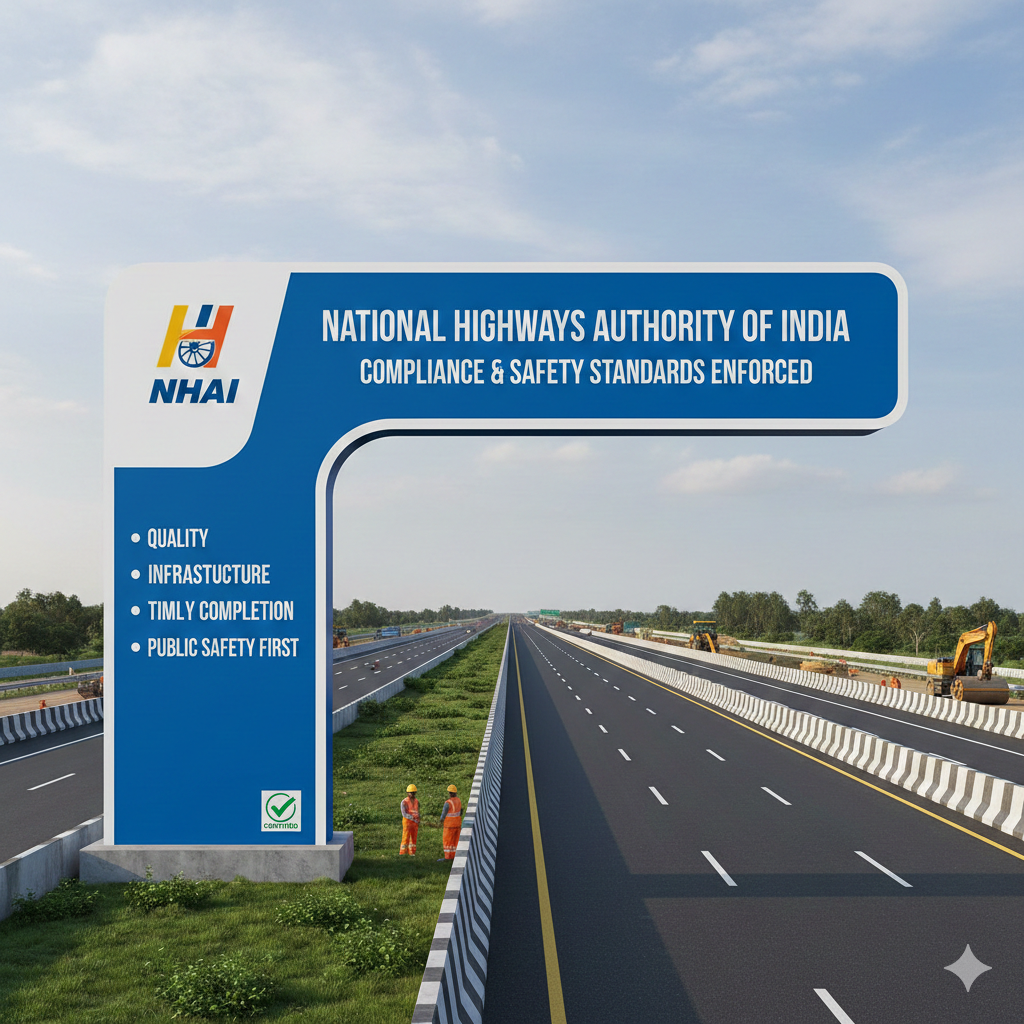
The National Highways Authority of India (NHAI) was created through the National Highways Authority of India Act, 1988. Its primary duty is the actual development, maintenance, and management of national highways.
“While MoRTH decides what to build, NHAI focuses on how to build it.”
The Project Lifecycle and Project Handover Process
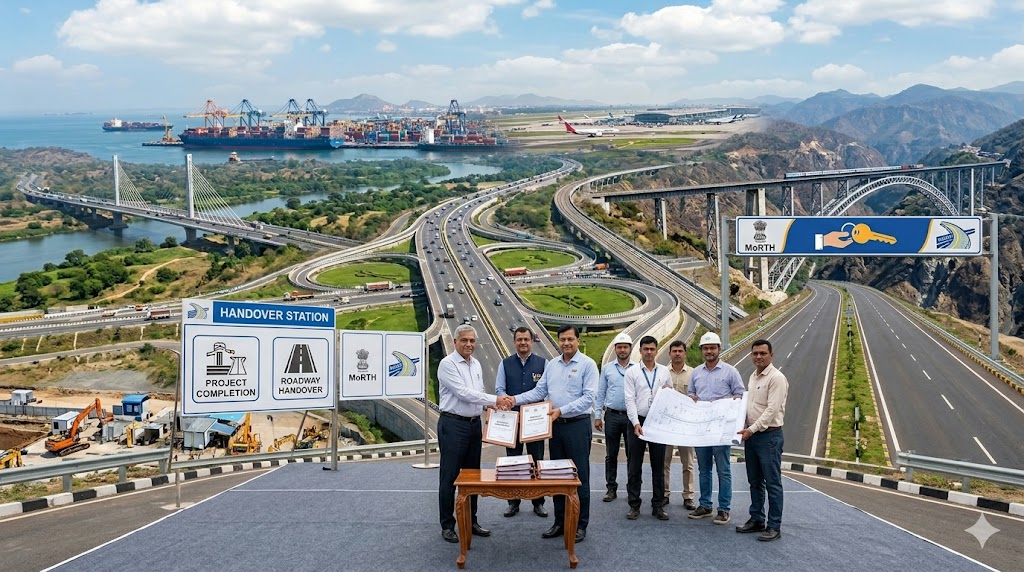
Building a highway is a massive task. The project handover process ensures a seamless transition from concept to concrete:
- Conceptualization: MoRTH identifies corridors based on economic impact and trade needs.
- Notification: Official notification under the National Highways Act, 1956 grants land acquisition powers.
- Feasibility and Tendering: NHAI conducts Detailed Project Reports (DPRs) covering soil, environment, and traffic counts before bidding.
- Implementation: NHAI manages contractors and safety standards on-site.
- Asset Management: Post-construction, NHAI handles tolling and maintenance, reporting back to MoRTH.
Financial Oversight and MoRTH and NHAI Coordination
Money is the fuel for infrastructure. Strong coordination is maintained via the Central Road and Infrastructure Fund (CRIF). Recent shifts toward “Delegated Financial Powers” have granted NHAI more autonomy to prevent administrative stalls.
NHAI currently utilizes various business models, such as:
- HAM (Hybrid Annuity Model): Cost-sharing between government and private entities.
- TOT (Toll-Operate-Transfer): Leveraging tolling rights to fund future maintenance.
For those looking to understand the broader tender landscape, check out the weekly highway policy tender digest.
Overcoming Operational Bottlenecks with the Project Handover Process
Land acquisition was historically the biggest hurdle. The introduction of the Bhoomi Rashi portal has digitized the project handover process, replacing slow physical file movement with transparent, real-time digital notifications. This ensures land issues do not stall the momentum of development. For detailed insights on current land acquisition norms, visit this resource.
Modern Synergy – Ministry Roles and Responsibilities
Technology is changing how we look at ministry roles and responsibilities through initiatives like the PM Gati Shakti National Master Plan. By using a digital map, engineers can identify potential conflicts with other utilities—like water pipes or power lines—before construction begins. Coupled with a centralized “Data Lake,” MoRTH can now monitor real-time progress while allowing NHAI to maintain operational autonomy. You can browse industry terminology here: complete glossary of NHAI terms.
Conclusion
The strength of India’s road network comes from the professional partnership between MoRTH and NHAI. By refining their roles and embracing a digital-first project handover process, they are not just building roads; they are building the foundation for India’s future growth. As this partnership stays focused on transparency and efficiency, the road ahead looks very bright.
Frequently Asked Questions
- What is the primary difference between MoRTH and NHAI?
MoRTH is the policy-making ministry that sets the rules and budget, while NHAI is the autonomous authority responsible for the physical execution, construction, and maintenance of the highway network.
- How has the project handover process improved recently?
The process has been streamlined through digitalization. Platforms like the Bhoomi Rashi portal and PM Gati Shakti have replaced manual, paper-based workflows with efficient, transparent digital systems.
- Why is MoRTH and NHAI coordination critical?
Effective coordination ensures that the long-term vision of the government (policy) is perfectly aligned with the technical requirements and site-level challenges (execution), resulting in faster, cost-effective infrastructure development.